What Is a Bulk FIBC Bag Supplier and How to Choose One?
A bulk FIBC bag supplier provides flexible intermediate bulk containers for storing and transporting powders, granules, and other dry materials. These bags commonly carry between 500 and 2,000 kilograms, depending on their design and safety factor. They are used across agriculture, chemicals, food processing, construction, and minerals.
The market is expanding. Grand View Research estimates that the global FIBC market could reach about USD 8 billion by 2030, supported by demand for efficient bulk packaging. MarketsandMarkets also forecasts steady growth through 2028, although reported values differ between research firms. That difference matters. Market data is useful, but it should not replace supplier verification.
Reliable Bulk Fibc Bag Suppliers should explain their fabric grade, safe working load, safety factor, filling design, discharge spout, and liner options. They should also provide batch records and testing documents. ISO 21898 offers important guidance for packaging used with non-dangerous goods. However, certification claims still require careful checking. Ask whether tests were performed by an independent laboratory or only documented internally.
A practical evaluation begins with the product itself. Picture a powdered ingredient moving through a dusty warehouse. The bag needs clean seams, stable lifting loops, and controlled discharge. Food applications may require suitable materials and documented hygiene procedures. Industrial applications may need antistatic fabric or moisture protection. Cheap bags can become expensive after leakage, downtime, or rejected shipments. I have seen specifications treated as minor details. They are not. A dependable supplier combines technical knowledge, transparent communication, production experience, and consistent quality control. The best choice is not always the lowest quote. It is the supplier that can prove performance before a full-scale order.
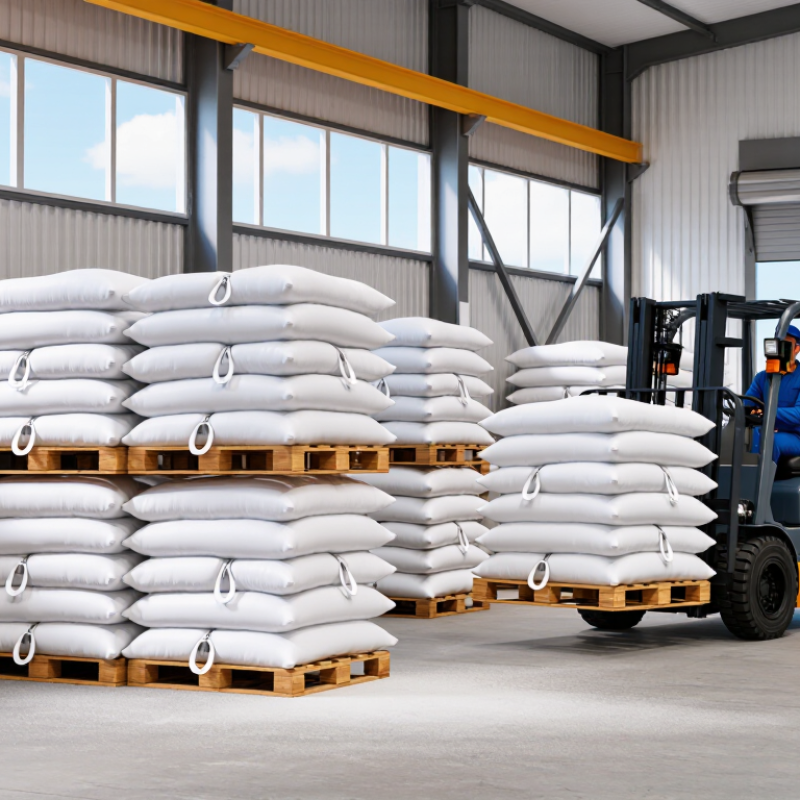
What Is a Bulk FIBC Bag Supplier?
A bulk FIBC bag supplier manufactures or sources flexible intermediate bulk containers for large-volume materials. These bags usually hold 500 to 2,000 kilograms of powders, granules, or agricultural products. A reliable supplier should understand filling methods, discharge designs, lifting loops, fabric strength, and storage conditions. The role involves more than selling bags.
According to Grand View Research, the global FIBC market was valued at about USD 5.2 billion in 2023. Its report also forecasts continued growth through 2030. This expansion reflects demand from food processing, construction, agriculture, and chemical manufacturing. However, market growth does not prove supplier quality. Buyers should request test reports, production samples, and batch traceability records. Ask whether the supplier follows ISO 21898 requirements for FIBC design and testing.
Look closely at the factory process. Check fabric weaving, seam inspection, load testing, and moisture protection. Confirm the safe working load and safety factor match the actual application. A supplier should also explain minimum order quantities, lead times, printing limits, and replacement procedures. Do not rely on attractive samples alone. A polished certificate can still hide weak production control. I have seen specifications overlooked during urgent purchasing. That mistake can cause delays, damaged goods, or unsafe handling. The better supplier communicates clearly, documents each batch, and admits limitations before accepting the order.
What Is a Bulk FIBC Bag Supplier and How to Choose One?
| Evaluation Dimension | Typical FIBC Specification or Range | What a Reliable Supplier Should Provide | How to Verify It | Why It Matters |
|---|---|---|---|---|
| Bag Capacity | Common safe working loads range from approximately 500 kg to 2,000 kg, depending on design and construction. | Clear rated capacity matched to the product density, filling method, lifting equipment, and transport conditions. | Review the technical drawing, product specification sheet, and load test documentation. | Correct capacity reduces the risk of overstressing the bag during filling, lifting, storage, or shipment. |
| Safety Factor | Common designs use a safety factor such as 5:1 or 6:1, subject to the applicable standard and intended use. | A declared safety factor supported by testing and consistent production controls. | Request test reports identifying the bag design, test method, batch, and rated capacity. | The safety factor indicates the relationship between the tested breaking load and the safe working load. |
| Fabric Construction | Woven polypropylene fabric is widely used; fabric weight and coating vary according to load, moisture, and product requirements. | Specified fabric weight, lamination or coating details, seam construction, and material consistency. | Compare samples with the approved specification and inspect fabric thickness, weave, seams, and stitching. | Fabric construction affects strength, durability, permeability, and resistance to handling damage. |
| Bag Design | Common configurations include four-panel, U-panel, circular, baffled, conductive, and ventilated designs. | Ability to recommend a design based on product flowability, storage space, discharge method, and handling equipment. | Confirm the body shape, lifting loops, top inlet, bottom outlet, liner, and closure details on the drawing. | The right design improves filling efficiency, stability, discharge control, and warehouse utilization. |
| Dimensions and Tolerance | Dimensions are usually customized; acceptable tolerances should be defined before production. | Controlled dimensions and a written tolerance range for body size, inlet, outlet, and loop position. | Measure pre-production samples and compare them with the approved technical drawing. | Accurate dimensions help ensure compatibility with filling machines, pallets, racks, and transport containers. |
| Product Protection | Options may include an inner liner, coated fabric, dustproof closure, UV stabilization, or anti-static construction. | Material and closure options selected according to moisture, dust, static, UV exposure, and contamination risks. | Check the liner material, coating specification, closure design, and any required performance test. | Protection features help maintain product quality and reduce leakage, contamination, and static-related hazards. |
| Food or Pharmaceutical Suitability | Food-contact or pharmaceutical applications require stricter material control and cleanliness procedures than general industrial use. | Documented raw-material controls, hygienic manufacturing practices, traceability, and relevant compliance documents. | Request declarations, cleanliness records, batch traceability, and application-specific test documentation. | Regulated products require stronger control of contamination, traceability, and material suitability. |
| Testing and Quality Control | Typical checks may include visual inspection, dimensions, seam strength, lifting-loop strength, and load testing. | A documented inspection plan with defined sampling, acceptance criteria, and corrective-action procedures. | Ask for quality records, sample inspection reports, and an explanation of how nonconforming bags are handled. | Consistent testing reduces variation between production batches and supports safer bulk handling. |
| Standards and Compliance | Applicable requirements depend on the destination, product, transport mode, and hazardous or non-hazardous classification. | Clear identification of the standards and regulations relevant to the specific application and market. | Verify certificates and declarations with the issuing organization or testing laboratory where possible. | Compliance documentation supports legal use, customer approval, and international shipment requirements. |
| Sample Approval | A representative sample should be reviewed before mass production, especially for customized bags. | Sample production, design confirmation, and written approval procedures before the purchase order is finalized. | Compare the sample against the drawing, approved material, dimensions, closures, and handling requirements. | Sample approval prevents costly misunderstandings about design, fit, and performance. |
| Minimum Order Quantity | Minimum quantities vary by bag type, printing, liner, coating, and customization level. | A transparent quotation showing minimum order quantity, tooling or setup charges, and price breaks. | Request a written quotation for several order volumes, including sample and small-batch options. | Understanding order thresholds helps control inventory and compare the true landed cost. |
| Lead Time | Production time depends on design approval, raw-material availability, quantity, testing, and customization. | A realistic schedule covering sample approval, production, inspection, and dispatch. | Obtain a written production timeline and confirm how delays or specification changes are managed. | Reliable scheduling supports production planning and prevents packaging shortages. |
| Traceability | Traceability should connect finished bags with production batches and relevant raw materials. | Batch numbers, inspection records, material records, and shipment documentation. | Ask the supplier to demonstrate how a delivered batch can be traced through its quality system. | Traceability simplifies investigations, recalls, complaint handling, and quality audits. |
| Packaging and Shipping | FIBCs are commonly compressed and palletized or otherwise packed to optimize warehouse and container space. | Packaging that protects bags from moisture, dirt, deformation, and handling damage. | Confirm packing quantity, pallet dimensions, container loading plan, labeling, and shipping documents. | Proper logistics planning reduces transit damage and improves freight-cost visibility. |
| Supplier Communication | Technical communication should cover drawings, materials, tolerances, testing, delivery, and after-sales support. | Prompt, precise responses and a designated contact who understands FIBC technical requirements. | Evaluate the quality of pre-order answers and request a complete specification rather than a price-only quote. | Clear communication reduces specification errors and supports long-term supply continuity. |
| Overall Selection Priority | Safety and suitability first | Select the supplier that best balances verified performance, compliance, consistency, service, lead time, and total cost. | Use a weighted comparison based on application risk instead of choosing solely by unit price. | The lowest quotation may create higher costs if bags fail, arrive late, or do not meet application requirements. |
Note: FIBC specifications must be confirmed for the actual product, filling and discharge process, handling equipment, storage conditions, destination market, and applicable regulations.